Radiators and air conditioning parts from Dubai
Читать оригинал на русскомBy Mikhail, Dubai
Automatically translated from the Russian article.
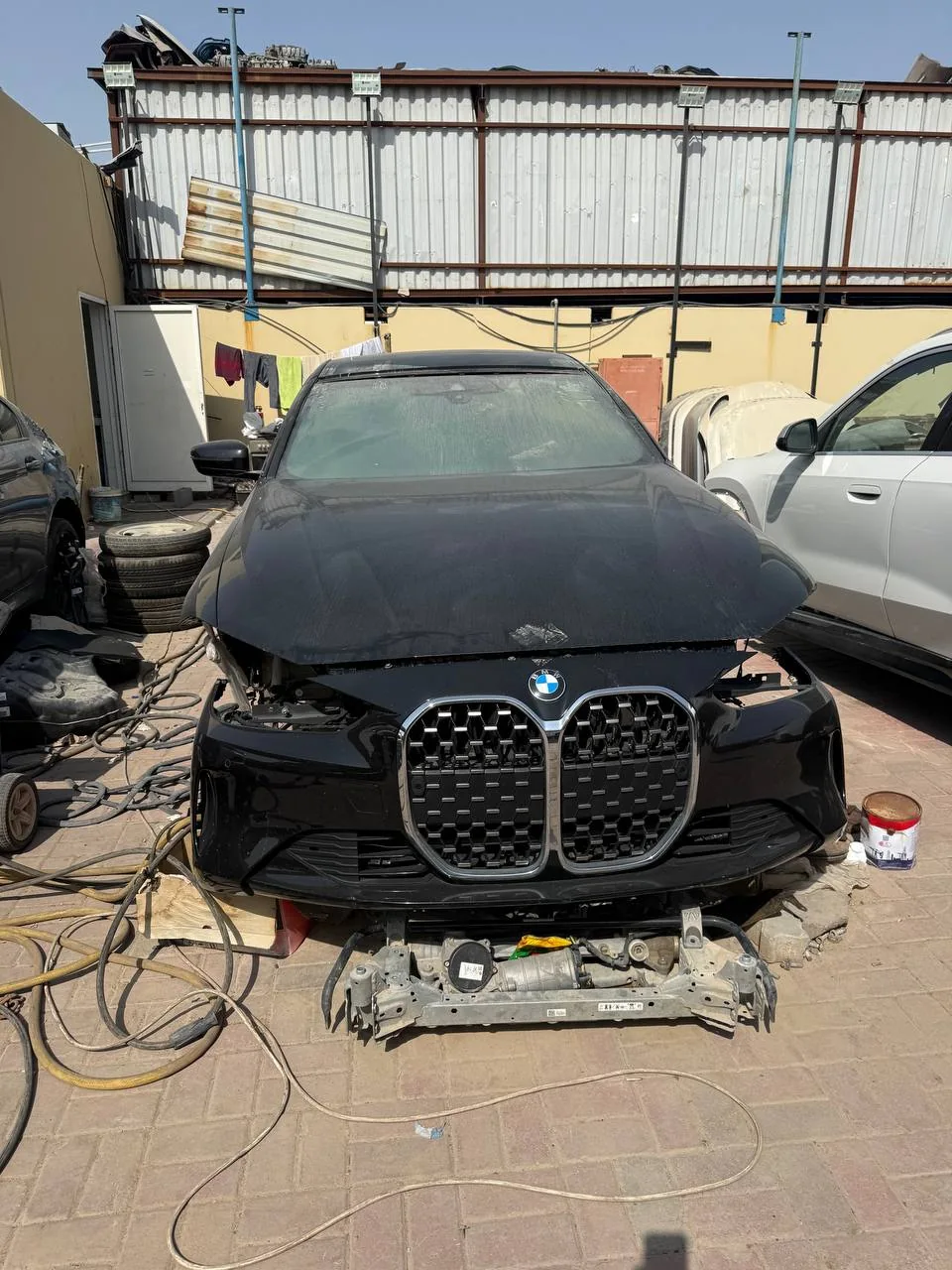
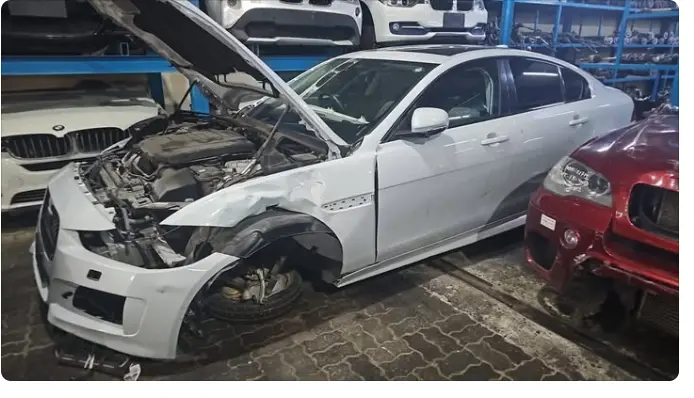
After a strike from the front, the line “radiator assembled” often appears in the estimate. The photo shows several heat exchangers behind bars. Each has its own contour, attachments and purpose. If you immediately divide them by function, it is easier to confirm the parts numbers and understand how much of the cooling package can be saved.
How to recognize the desired heat exchanger
The main radiator removes heat from the engine. The condenser belongs to the air conditioner. The intercooler cools the boost air, if such variant is provided. Separately, a box heat exchanger, a fan with a casing, a dehumidifier or tubes may be needed. Ask the wizard to mark the desired component in the photo and indicate the outline. Write down the VIN and engine code, especially if the same model was produced with multiple motors or a hybrid setup.
At the radiator of the engine, check the dimensions of the core, the location of the pipes, supports and connections. Notice if the heat exchanger of another circuit is built in, if provided. For the fan, look at the size of the casing, the number and location of fans, fastenings and connection. If the entire cooling package is required, list each position. It is difficult to understand whether there are internal guides, side supports and a tourniquet.
Compressor, condenser and air conditioner tubes
For the compressor, specify the marking and type of drive. Compare mounts, electrical connectors, and tube connections. For hybrid and electric power plants, the requirements for the electric compressor and maintenance of its circuit are specified. The type of oil and refrigerant is determined by car documentation and marking. Data on refueling and maintenance procedures are taken from the profile workshop.
The condenser can be supplied with a dehumidifier or have separate serviced elements. Agree on the composition and check if the fittings are closed after removal. For the tube, compare the curves, the position of the brackets and the type of connections. If the car has a rear climate circuit, this is indicated prior to the search. A single snapshot of a section under the hood doesn't always show which highway goes back and where it connects to the rest of the system.
If the compressor fails, ask the workshop to determine the cause and condition of the circuit prior to purchase. When contaminated, wear products may remain in the system. The installer must decide according to the manufacturer's procedure which parts are inspected, washed or replaced. Buying only a compressor does not solve the problem until the condition of the circuit is unknown.
After a frontal impact, check not only the heat exchangers themselves. Due to the displacement of the front mount panel, sealing inserts and ducts may not approach the new package without restoring the body. Ask the workshop to list the items that can be moved. From a fan with a casing, check the presence of a control unit or a resistor, if they are provided by the design. At the removed node, take a separate photo of the contacts and mounts. To order a part of the package, specify its place relative to the remaining components.
Check whether the wording "compressor assembled" different sentences are hidden. One supplier has a compressor with an installed pulley and electrical connection, the other has a node without a part of the ancillary components one. Compare the photo and the composition of the catalog. For a new detail, ask the installer in advance how the actual amount of oil and compatibility with the circuit are checked. For a used compressor, request information about the donor, the reason for removal and the available test results. The photo of the freely rotating pulley does not reveal the work of the compressor under load.
GCC, European and American versions
In different markets, the same model may have different power plant, equipment, cooling and climatic contours. GCC performance does not give a universal radiator size. For the UAE, Europe and the USA, the applicability is checked by VIN, full engine code and installed equipment. The American donor specify which transmission and configuration the package belongs to. In a car with additional cooling or a rear climate, the tubes and the location of the branches are checked.
Compare a photo of an old detail with a sentence. On one frame, you need dimensions and installation points, on the other - a label, connector or fittings. Even if a new radiator is placed in the opening, the pipe can go in the other direction, and the fan - do not match the mount. If the radiator has already been changed, separately specify the factory scheme and what is on the car now.
Inspection and frequent errors
The radiator or condenser inspect the core, edges, tanks and fittings. See if there are clogged areas, traces of impact, corrosion, pollution and repairs. Ask for a photo on both sides and check if the leakage has been checked. The clean honeycombs in the photo do not confirm the absence of a leak. If the used part is removed after the impact, the straightness of the frame and the condition of the attachments are also important.
A common mistake is to order a condenser under the word “radiator” without specifying the contour. The second is to buy a fan in diameter without a connector and mounts. The third is to take a compressor without diagnosing the rest of the system. When comparing the new and used options, specify whether seals, dehumidifier, casing or brackets will be required separately. If the repair is related to the refrigerant, the work is carried out in the specialized workshop according to the manufacturer's procedure.
When inspecting the open connector, pay attention to the state of the thread, landing surface and stub. If the part has been lying for a long time with open connections, inform the installer about it. For an aluminum line, photos along the entire length, including the bends and mounting points, are useful. A slight deformation near the bracket can make it difficult to install even when the ends of the tube externally coincide. On the flexible part, ask for pictures of the clips and the outer shell.
When choosing a used part, compare the cost of inspection and installation with the price of a new option. If the radiator has traces of repair, ask to show the site separately and clarify whether it was checked after repair. At the new condenser, see if the connections are closed and if there are no traffic damage. Separately write down who performs the leakproofness check after installation and what consumables will be required by the manufacturer's procedure. For a cooling package in the collection, it is useful even before buying to get a photo of the side supports and see if the frames diverge.
For urgent shipment, specify what the cargo place will be. In a set of radiators, protruding nozzles and mounts increase the dimensions. Sometimes they cannot be packed in the same package as the compressor removed without additional protection. Compare the sizes and composition of the two package options if the supplier can ship the package in whole or in separate places.
The order of inspection is conveniently fixed directly in the request. First, you need a general view of all the parts with their position on the car. Then you need a photo of the cores on both sides and close-up plans for each connection. If the outer diameter of the fittings is the same, still compare the position of the attachments and the shape of the connections. In the photo with the ruler, ask to show from which point the size is removed. For a long tube, several frames in one sequence are useful. This helps to determine where the bend that should pass around the adjacent component is located. If part of the system has already been replaced, attach a photo of the new and old version separately.
Before ordering, check if the donor allows you to remove the radiator without damaging the mounts. If the frame is already deformed, ask to show the heat exchanger separately on both sides.
Packaging and delivery
The heat exchanger is fixed through strong zones. For honeycombs need protection with a gap so that the packaging material or the adjacent part does not press on the core. Connectors close and protect against impact. The compressor is fixed separately from the radiator. Conditions of transportation of parts with residues of liquids shall be agreed with the carrier. Electronics, airbags and fragile parts are checked separately and sent only after approval.
Air to Russia and Belarus - approximately 5-10 days at $12-20 per kg. Container to Moscow - about a month at $1.8-3.5 per kg. The exact conditions are confirmed separately. For Kazakhstan and other CIS countries, we calculate the route on request. There is no minimum order value. The 10% service fee applies to the parts price. Packaging, transportation and customs are paid separately.
Checklist
- VIN, engine code, drive type and cooling or climate configuration.
- OEM number, marking, dimensions, mountings and location of connections.
- The state of cells, tanks, flanges and brackets in the photo of a specific detail.
- The results of checking the tightness, if any, and the composition of the kit.
- Installer requirements for contour, consumable parts and installation.
- Packaging, route and final estimate.
Frequently asked questions
Is it possible to order only a condenser?
Specify it separately in the list. We'll check VIN, number and lineup. There is no minimum order value.
Will the radiator fit with the GCC version?
Check the specific number, sizes, connections and configuration. The general market mark does not confirm applicability.
How to evaluate the used radiator on the photo?
Ask for both sides, tanks and mounts. Separately specify the presence of a leakproofness check.
When do I have to pay?
After requesting, photo and price of a specific detail and agreeing on the estimate.
Official sources
REAL EXAMPLES